Author: CADinfo

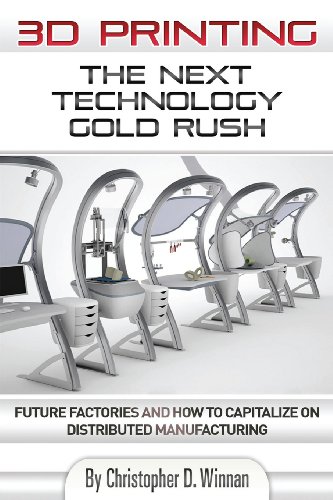
3D Printing: The Next Technology Gold Rush

This book concentrates on three main areas.

1. Easy to read, yet detailed explanations of all the 3D printing related technologies currently available
2. Practical advice on how this technology can be leveraged as a successful business in today’s economy.
3. The wider long-term repercussions, including real world examples of how 3D printing is set to change the future of industry.
Read More

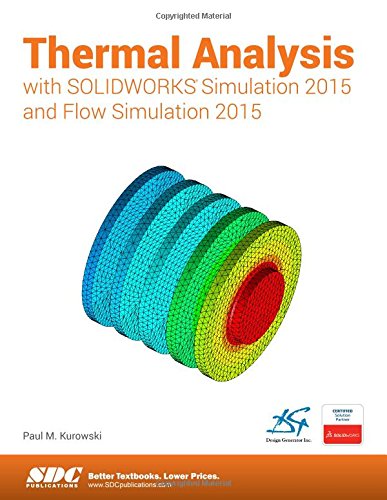
Thermal Analysis with SOLIDWORKS Simulation 2015 and Flow Simulation 2015

Thermal Analysis with SOLIDWORKS Simulation 2015 goes beyond the standard software manual. It concurrently introduces the reader to thermal analysis and its implementation in SOLIDWORKS Simulation using hands-on exercises. A number of projects are presented to illustrate thermal analysis and related topics. Each chapter is designed to build on the skills and understanding gained from previous exercises.

Thermal Analysis with SOLIDWORKS Simulation 2015 is designed for users who are already familiar with the basics of Finite Element Analysis (FEA) using SOLIDWORKS Simulation or who have completed the book Engineering Analysis with SOLIDWORKS Simulation 2015. Thermal Analysis with SOLIDWORKS Simulation 2015 builds on these topics in the area of thermal analysis. Some understanding of FEA and SOLIDWORKS Simulation is assumed.

Read More

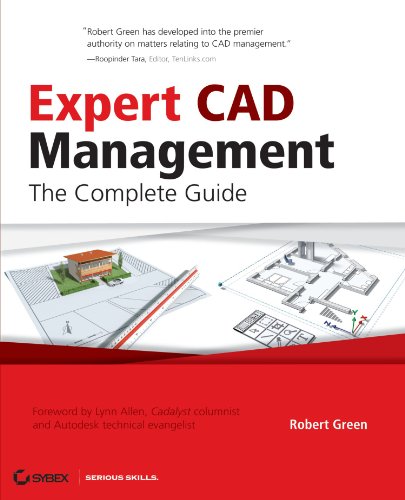
Expert CAD Management: The Complete Guide

Get the strategies you need for successful CAD management in this one-of-a-kind resource. You’ll learn basics such as how to assign tasks, set budgets, and formulate ROI-and gradually delve into more complex issues such as managing intellectual property, selling ideas to management and end users, and configuring for specific engineering environments. This indispensable resource is packed with savvy insights, practical techniques, and real-world advice to broaden your technical, business, and management skills.

Read More

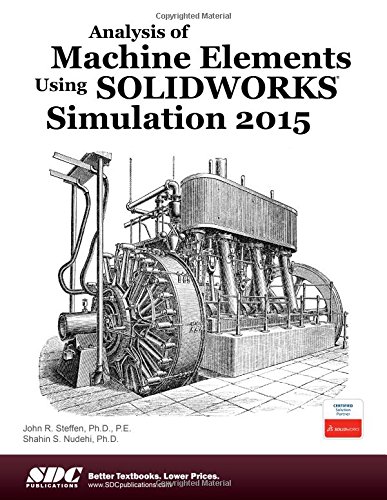
Analysis of Machine Elements Using SOLIDWORKS Simulation 2015

Analysis of Machine Elements Using SOLIDWORKS Simulation 2015 is written primarily for first-time SOLIDWORKS Simulation 2015 users who wish to understand finite element analysis capabilities applicable to stress analysis of mechanical elements. The focus of examples is on problems commonly found in an introductory, undergraduate, Design of Machine Elements or similarly named courses.

In order to be compatible with most machine design textbooks, this text begins with problems that can be solved with a basic understanding of mechanics of materials. Problem types quickly migrate to include states of stress found in more specialized situations common to a design of mechanical elements course. Paralleling this progression of problem types, each chapter introduces new software concepts and capabilities.

Many examples are accompanied by problem solutions based on use of classical equations for stress determination. Unlike many step-by-step user guides that only list a succession of steps, which if followed correctly lead to successful solution of a problem, this text attempts to provide insight into why each step is performed.

This approach amplifies two fundamental tents of this text. The first is that a better understanding of course topics related to stress determination is realized when classical methods and finite element solutions are considered together. The second tenet is that finite element solutions should always be verified by checking, whether by classical stress equations or experimentation.

Each chapter begins with a list of learning objectives related to specific capabilities of the SOLIDWORKS Simulation program introduced in that chapter. Most software capabilities are repeated in subsequent examples so that users gain familiarity with their purpose and are capable of using them in future problems. All end-of-chapter problems are accompanied by evaluation “check sheets” to facilitate grading assignments.

Table of Contents

Introduction
1. Stress Analysis Using SOLIDWORKS Simulation
2. Curved Beam Analysis
3. Stress Concentration Analysis
4. Thin and Thick Wall Pressure Vessels
5. Interference Fit Analysis
6. Contact Analysis
7. Bolted Joint Analysis
8. Design Optimization
Appendix A
Appendix B
Index

Read More